
Wasp & Hornet Nest Removal in Clifton, NJ
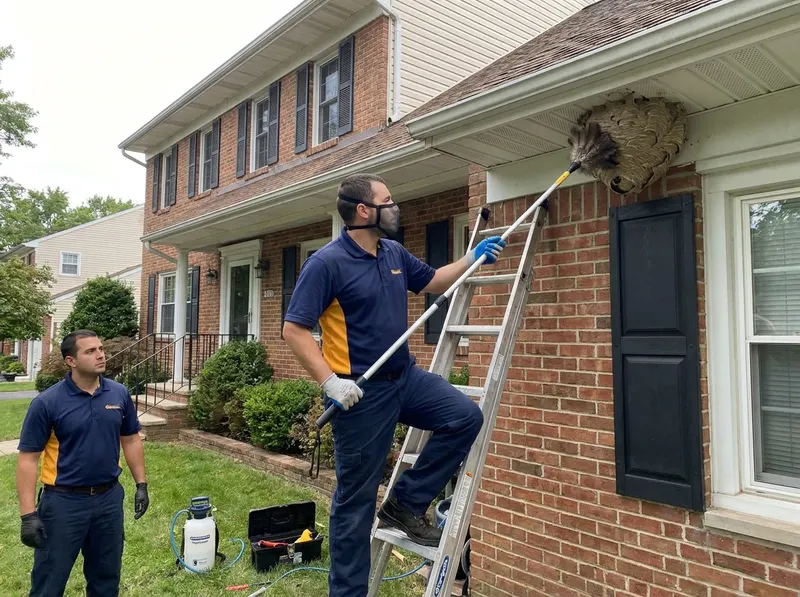
- Included: identification of the species, direct treatment of the active nest, physical removal where the nest is reachable, and sealing or advising on the gap the colony entered through.
- Speed: most Clifton wasp and hornet calls are handled same day or next day, because an active nest over a doorway or on a porch ceiling is a safety issue, not a scheduling item.
- Cost: wasp and hornet nest removal in Clifton starts at $250, with most single-nest jobs landing between $250 and $450 depending on height, access and whether the colony is inside a wall.
- What we handle: paper wasp nests under soffits and porch roofs, yellowjacket colonies in ground holes and wall voids, bald-faced hornet nests in trees and shrubs, and mud daubers in garages and sheds.
- To book: call (862) 429-4608 with the address, the floor or height of the nest, and how long you've been seeing traffic — that's enough to give you a ballpark before anyone comes out.
<p>Species matters more with stinging insects than with almost anything else we treat. A paper wasp nest under an Athenia porch ceiling is an open, umbrella-shaped comb with maybe fifteen to thirty workers — reachable, treated, taken down in one visit. A yellowjacket colony that has moved into a wall void or a hole in the lawn is a different animal: several thousand workers by late August, defensive, and it will send workers out through a second exit if you disturb the first. Bald-faced hornets build the grey football-shaped nest people photograph in maples along the side streets near Weasel Brook Park and Nash Park, and those colonies defend a wide radius without being touched. We name the insect on arrival and tell you plainly which of those three situations you have.</p><p>Timing in Clifton follows a predictable curve. Queens start small nests in April and May under railings, grill covers, and mailbox posts — that is the cheapest, easiest window and the nest is often the size of a golf ball. By <strong>late July through September the colonies peak</strong>, foraging turns aggressive, and calls jump from properties near the wooded edges — Montclair Heights, the slopes below Garret Mountain Reservation, and yards backing onto Third Ward Veterans Memorial Park, where ground-nesting yellowjackets take over old rodent burrows and retaining-wall gaps. If you are getting stung while mowing and cannot see a nest, it is almost always in the ground, and that is a job to stop doing yourself.</p><p>Older Clifton housing stock creates the wall-void version of this problem. Brick two-families and multi-families in Botany Village, Delawanna, Lakeview and Richfield have <strong>open soffit returns, gaps behind vinyl J-channel, and unsealed siding corners</strong> that wasps read as a cavity. On those, we treat the void and let the colony collapse rather than ripping siding — then <strong>seal the entry so next season's queen finds it closed</strong>. That sealing step is the part hardware-store spray never gives you, and it is why the same porch column gets a nest three years running.</p><p>When does one visit fit, and when does it not? A single accessible nest — porch ceiling, soffit corner, shed rafter, shrub — is genuinely a one-and-done. A property with repeat activity every summer, or a landlord fielding tenant complaints across multiple units, is usually better served by treating the current nests plus a <strong>perimeter and eave treatment</strong> that discourages new nest-building for the rest of the season. The trade-off is honest: the perimeter work costs more up front and does not carry a guarantee that no wasp will ever appear, but it dramatically cuts how often you're calling in July. We will tell you which one your building needs; nobody here is going to push a monthly plan for a single nest over a front step.</p><p>Two limits worth stating before you call. Nests above roughly the second floor, on steep roof faces, or inside chimneys and high gable peaks may require ladder work or equipment we'll confirm on site — that affects price and sometimes scheduling. And a nest that is not currently active does not need treatment; if you have an empty grey hornet nest left from last year, we will say so instead of charging you to remove decoration. Landlords and property managers in Passaic County can call (862) 429-4608 and get an answer on who is coming and when — not a voicemail loop while a tenant keeps getting stung at the back door.</p>
Call (862) 429-4608Wasp & Hornet Nest Removal pricing in Clifton
| Single accessible nest — porch ceiling, soffit corner, shrub, shed rafter | $250 – $325 |
| Ground-nesting yellowjacket colony (lawn, retaining wall, old burrow) | $275 – $400 |
| Bald-faced hornet nest in a tree or tall shrub, ladder access | $300 – $475 |
| Wall-void or soffit colony — treat, collapse, then seal the entry point | $375 – $600 |
| Multiple nests on one property or multi-family building, all units checked | $425 – $750 |
| Seasonal eave and perimeter treatment added to nest removal | $250–$300 |
Exact price confirmed free on-site before any work.
Wasp & Hornet Nest Removal — questions, answered
How fast can you remove a wasp nest in Clifton?
Most Clifton wasp and hornet calls are scheduled same day or next day. Active nests over doorways, on porch steps, or near a child's play area are treated as urgent, so call (862) 429-4608 early in the day for the best chance at a same-day slot.
What does wasp and hornet nest removal cost in Clifton, NJ?
Wasp and hornet nest removal in Clifton starts at $250, and most single-nest jobs fall between $250 and $450. Wall-void yellowjacket colonies and multi-nest properties run higher. These are ballparks — the exact price is confirmed on site before any work begins, at no charge for the look.
Can I just spray a hornet nest myself at my Clifton house?
Canned spray works on a small, open paper wasp comb you can reach from the ground, and it fails on the two situations Clifton homeowners call about most: ground yellowjackets and colonies inside a wall. Both have multiple exits and thousands of workers by August, and disturbing them from a ladder is how people get stung repeatedly.
Why do wasps keep nesting in the same spot on my Clifton home every year?
Because the opening is still there. Older Clifton houses in Botany Village, Athenia and Richfield have soffit returns, siding gaps and porch-column voids that read as ideal nest cavities, and a new queen finds them each spring. Sealing the entry after the colony is treated is what breaks the cycle — removal alone does not.
Do you handle wasp nests for landlords and multi-family buildings in Clifton?
Yes. Multi-family and two-family properties across Clifton — Delawanna, Lakeview, Albion Place and Allwood included — are a regular part of this work, including checking shared entries, rear porches and basement bulkheads where tenants report activity. Call (862) 429-4608 and you'll get a straight answer on timing and total scope.