
Rodent Control in Clifton, NJ
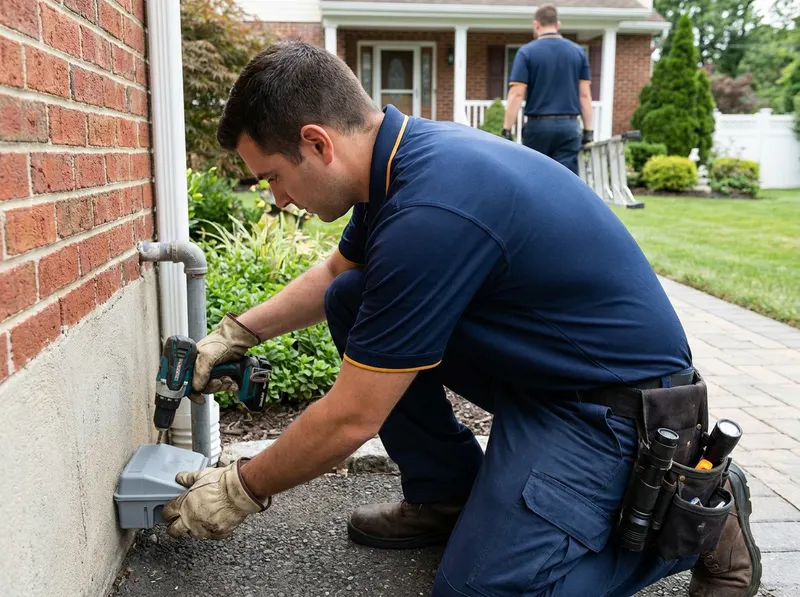
- What's included: a full interior and exterior inspection, identification of mouse versus rat activity, trap and bait placement in safe locations, entry-point mapping, and a written list of the gaps that need sealing.
- How fast: same-day and next-day appointments are usually available in Clifton, and active kitchen or bedroom sightings are treated as priority calls.
- What it costs: most Clifton rodent jobs land between $250 and $650, with a $250 minimum; larger sealing work on two-families and older foundations runs higher.
- What we handle: house mice, Norway rats, roof-line and attic activity, basement and crawlspace runways, garage and utility-room entry, plus removal of accessible dead rodents found during service.
- How to book: call (862) 429-4608 to schedule a free on-site inspection where the exact price is confirmed before any work begins.
Rodents are a structural problem in Clifton before they are a sanitation problem. A mouse needs a gap the width of a pencil; a rat needs about the size of a quarter. In Botany Village and Dutch Hill, where much of the housing stock predates 1940, the usual routes are rubble and fieldstone foundation joints, old coal-chute patches, and the gap where a gas or water line was run through the sill. In Athenia and Rosemawr, detached garages and additions built onto older homes create a seam that was never fully closed at the roofline. In Delawanna and along the rail and industrial edges, <strong>Norway rats travel exterior burrows and sewer laterals</strong>, which is a different job than mice — outdoor burrow work, garbage-area correction, and heavier exclusion at grade level. Naming which rodent you have on the first visit is what keeps the treatment from being wasted.
The decision most Clifton homeowners face is trapping alone versus trapping plus exclusion. Trapping alone makes sense in a narrow case: a single mouse tracked in through a propped door, no droppings anywhere except one room, no history of activity. Everything else needs sealing. If a house has produced mice two winters in a row, the population is not visiting — it is nesting, and the interior harborage plus the open route both have to be addressed. <strong>Sealing costs more up front and is the only part of the work that stops the next generation.</strong> The trade-off is real and worth stating plainly: pure trapping is cheaper and faster to schedule, and it tends to repeat in October and November when temperatures drop and rodents move indoors across Passaic County. Exclusion is a one-time expense against a recurring one.
Multi-family buildings change the math again. In Richfield, Lakeview, and the older brick two-families around Albion Place, mice and rats move through shared walls, chases, and common basements — which means a unit-only treatment pushes activity next door instead of ending it. <strong>Rodent pressure in shared-wall buildings is a building problem, not a tenant problem</strong>, and that is worth telling a tenant who thinks they caused it. For landlords and property managers, the practical approach is treating the basement, the common utility penetrations, and the affected units together, then verifying with follow-up checks rather than assuming silence means success. Near Montclair Heights and the rental blocks by Montclair State University, turnover-season food debris and unsecured curbside trash are frequently the driver; correcting those conditions is part of the recommendation, not an add-on.
Exterior conditions matter here more than most Clifton residents expect. Properties backing the stream corridor at Weasel Brook Park, the wooded slope below Garret Mountain Reservation, and the mature landscaping around Nash Park and Main Memorial Park give rodents cover right up to the foundation. Dense ivy, woodpiles against siding, bird feed, and dog waste all shorten the distance a rat has to travel. <strong>No interior program holds if the exterior keeps restocking it.</strong> Every inspection includes a walk of the perimeter — grade-level gaps, dryer and bath vents, garage door corners, and the sealing point where the driveway meets the wall — so the report reflects the whole building, not just the room where the mouse was seen. Call (862) 429-4608 and we will come look before quoting anything.
Call (862) 429-4608Rodent Control pricing in Clifton
| Rodent inspection with initial trapping and bait placement (single-family) | $250 - $400 |
| Mouse program with follow-up visits and verification checks | $325 - $600 |
| Norway rat service including exterior burrow treatment and grade-level work | $375 - $750 |
| Entry-point sealing / exclusion (per area, materials included) | $350 - $900+ |
| Two-family or small multi-unit building, basement plus affected units | $500 - $1,300 |
| Attic or crawlspace rodent activity with access and nesting removal | $450 - $950 |
| Repeat follow-up visit after initial service | $250 minimum |
Exact price confirmed free on-site before any work.
Rodent Control — questions, answered
How much does rodent control cost in Clifton, NJ?
Most rodent jobs in Clifton run between $250 and $650, with $250 as the minimum charge for any visit. Sealing work on older foundations and multi-family buildings can exceed that range. These are ballparks — the exact price is confirmed on-site during a free inspection, before work starts.
Do I need a monthly plan for rodent control in Clifton?
No. Many Clifton rodent problems are resolved with an initial service plus one or two follow-up visits to verify the activity has stopped. Ongoing service is worth considering for commercial kitchens, buildings backing the rail corridor in Delawanna, or properties with repeat pressure from neighboring lots — but it is a choice, not a requirement.
Can you come out today for mice in my Clifton home?
Same-day and next-day appointments are usually available across Clifton, and active sightings in kitchens or bedrooms are treated as priority. Call (862) 429-4608 with your neighborhood and what you have seen or heard, and you will get a straight answer on timing rather than a callback.
Why do mice keep coming back in older Clifton houses?
Because the entry point was never closed. Pre-1940 homes in Botany Village, Dutch Hill, and Athenia commonly have fieldstone foundation joints, unsealed utility penetrations, and patched openings that a mouse can pass through. Trapping removes the current mice; sealing those gaps is what stops the next ones.
Can rodents in my Clifton two-family be coming from the neighboring unit?
Yes — in Clifton's shared-wall two-families and small apartment buildings, mice and rats routinely travel through common basements, wall chases, and utility penetrations between units. Treating one apartment alone often just relocates the activity, so the effective approach covers the basement, the shared penetrations, and the affected units together.